

Photographer's Guide: Pro Tips for Capturing Riverfire Fireworks
Brisbane's Riverfire is a spectacle that draws photographers from across the country. With its dazzling pyrotechnics, synchronised flyovers, and dramatic reflections on the Brisbane River, it's a rare opportunity to capture vibrant, high-impact night shots. The challenge lies in timing, exposure, and composition — but with the right preparation, you can produce truly professional results.
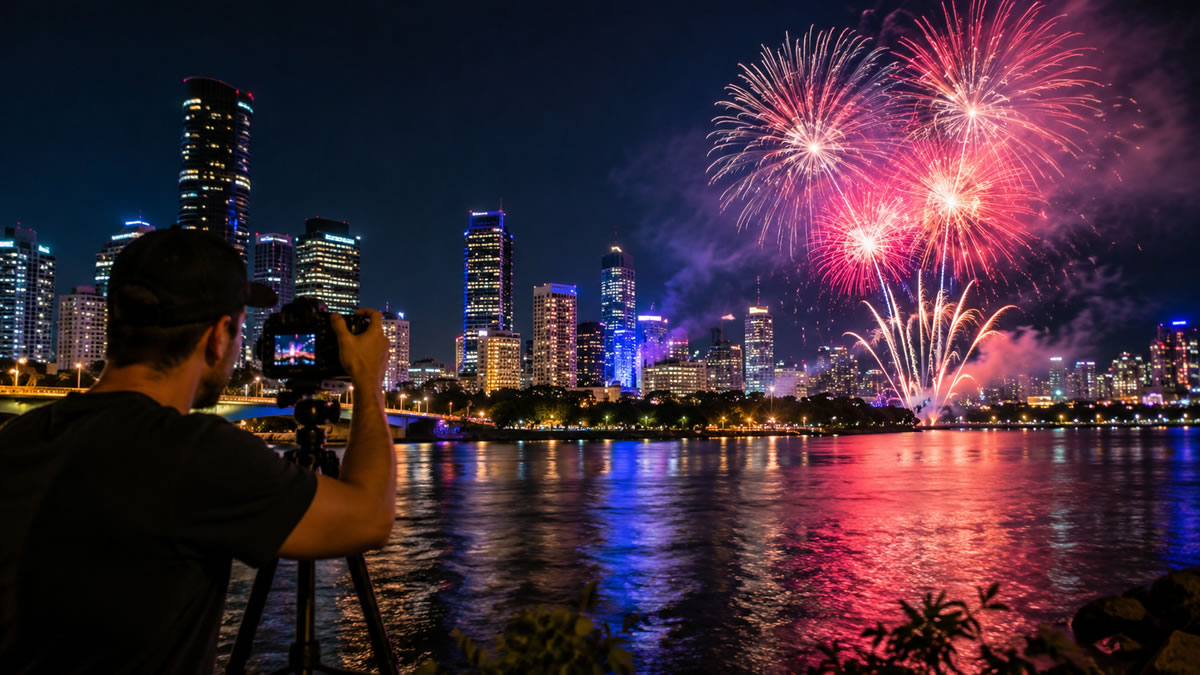
Camera Settings for Crisp, Colourful Shots
- Shutter Speed: 2–5 seconds — long enough to capture full firework bursts and light trails without overexposing.
- Aperture: f/8 to f/11 — a sweet spot for sharpness and adequate depth of field.
- ISO: 100–200 — keeps digital noise low while retaining detail in the dark sky.
- Focus: Manual, set to infinity — prevents autofocus hunting in low light.
- White Balance: Daylight — preserves natural fireworks colours.
Best Riverfire Shooting Locations
Kangaroo Point Cliffs: Elevated vantage with panoramic river views.
Story Bridge Walkway: Iconic framing, but expect heavy crowds.
South Bank Parklands: Close proximity to the action and vibrant reflections.
Wilson's Outlook Reserve: Lesser-known, with spectacular skyline backdrops.
Riverside rooftops or bars: Great for avoiding street-level congestion.
Timing & Positioning Strategy
- Arrive 3–4 hours early to secure a prime, unobstructed spot.
- Capture pre-fireworks crowd shots and golden hour cityscapes for variety.\
- Start shooting as soon as the first bursts appear — the sky is clearest early.
- Mid-show, experiment with wider compositions for layered effects.
- Finish with the grand finale — anticipate multiple bursts for dramatic frames.
Essential Gear Checklist
- Tripod: Rock-solid stability for long exposures.
- Remote Shutter Release: Eliminates camera shake when pressing the shutter.
- Wide-Angle Lens (14–24mm or 24–70mm): Captures both skyline and fireworks.
- Telephoto Lens (70–200mm): Isolates bursts or crowd reactions.
- Spare Batteries & Memory Cards: Long events drain both quickly.
- Lens Cloth: Fireworks haze can coat glass with residue.
Post-Processing Tips
- Boost Vibrance, Not Saturation: Keeps colours punchy without overcooking.
- Increase Contrast Selectively: Enhances separation between bursts and sky.
- Use Noise Reduction Carefully: Preserve detail in light trails.
- Crop for Composition: Remove dead space, centre bursts, or create panoramas.
Final Thought: Riverfire offers both technical and creative challenges. Learn the rules, then bend them — try multiple exposures, composite bursts, or shoot through foreground silhouettes for unique storytelling. The best Riverfire images don't just show fireworks — they capture the feeling of the night.